
Skip to content
ABS Pilates

A beginner's guide · Written by a licensed PT

Pilates, explained by a physical therapist
Pilates is a low-impact, mind-body exercise that uses controlled movement, proper breathing, and alignment to build core strength, improve balance and flexibility, and reduce everyday aches.

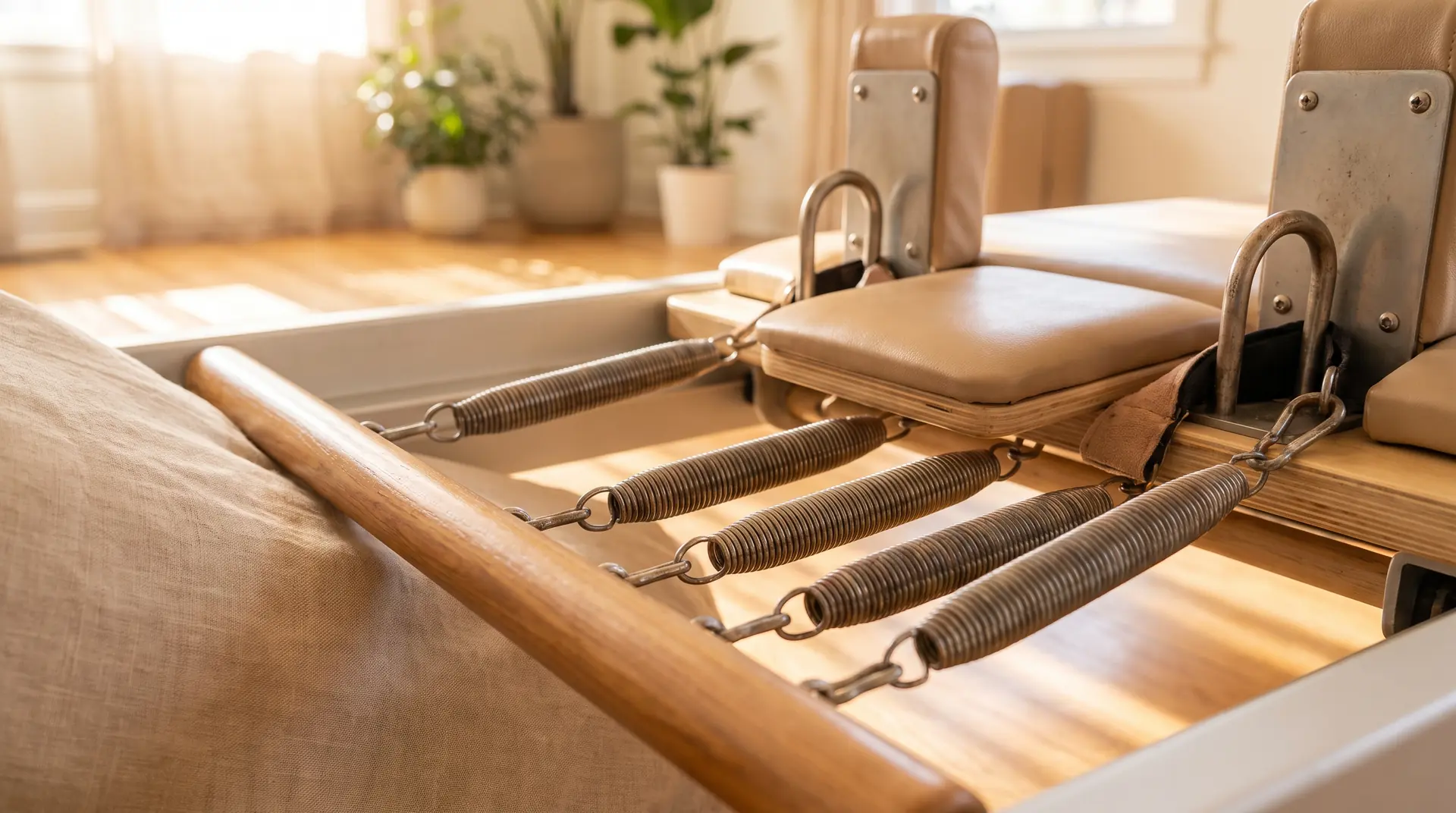
Close view of the springs and footbar on a wood-framed Pilates Reformer, lit by warm daylight

The short answer

A mindful exercise method that connects your mind and body
Pilates works through precise, controlled movements, proper breathing, and efficient form. Every exercise engages the whole body with a strong emphasis on alignment and control, helping you move better not just in class, but in everyday life.

At ABS Pilates it is taught by a licensed physical therapist. Amanda has used Pilates in rehabilitation for total knee replacements, ACL reconstructions, and lower back, neck and shoulder injuries, so the modification you need already exists before you have to ask for it.

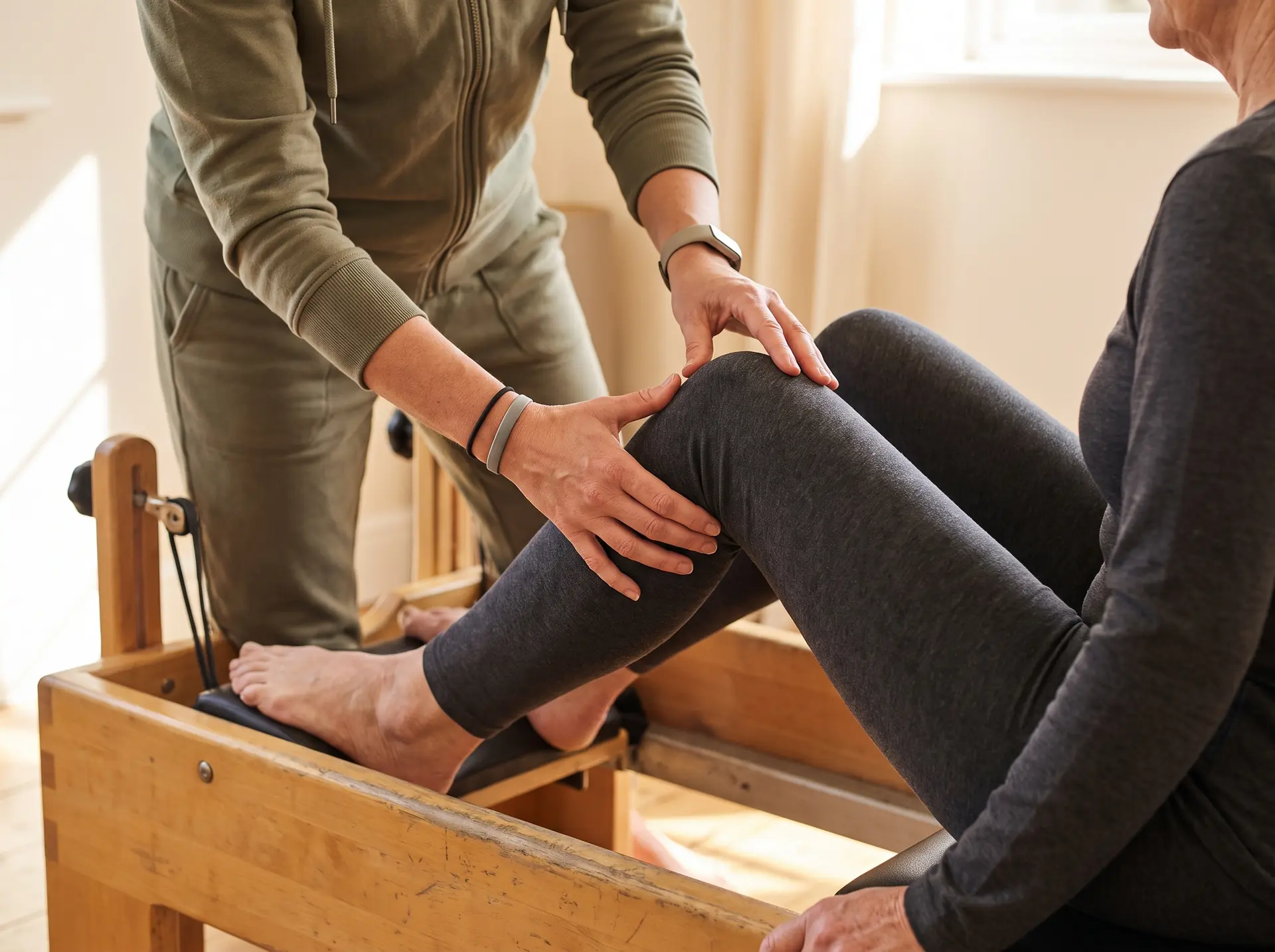
An instructor's hands guiding a client's knee alignment during a Reformer exercise

What changes, and why

Four things a regular practice gives back

The foundation

Build core strength

Pilates trains the deep abdominal and back muscles that hold your spine steady, rather than the ones that only look busy. That is the strength that carries a grocery bag up the stairs, and it is the reason the work transfers out of the studio.

Improve balance

Enhance stability and body awareness to move with greater control and confidence.

Increase coordination

Train your body and mind to work together through precise, intentional movement.

The part nobody expects

Decrease stress
Use breath-led movement to calm the nervous system and restore mental clarity. An hour that demands this much attention leaves no room for the rest of your day, which is exactly why clients call it the best hour of theirs.

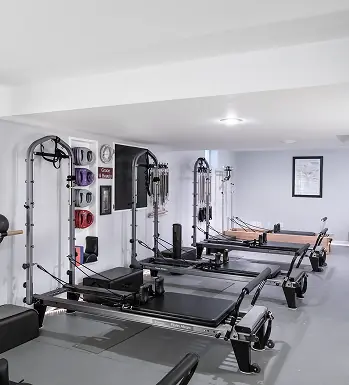
A row of Reformers and Tower units along the wall of the ABS Pilates studio, with springs and props on a rack

Est. early 1900s · Joseph Pilates

A frail child who refused to stay that way

Pilates was created in the early 20th century by Joseph Pilates. As a frail child often plagued by illness, he refused to let it define him. Through dedicated daily exercise, he grew into an accomplished gymnast and wrestler, and discovered that consistent movement kept him strong and healthy.

He developed a system he originally called “Controlology,” which later became known as Pilates. His method includes exercises that target every part of the body in a balanced way. Although created in the early 1900s, Pilates didn't become widely popular until the early years of the 21st century.

Today, Pilates is used in

  • Fitness centers
  • Private studios
  • Rehabilitation
  • Hospitals

Six principles · every class

Principles of Pilates

At its heart, Pilates builds awareness of breath, spinal alignment, and deep core strength while uniting mind and body.

These foundational principles guide every movement and every class at ABS Pilates.

  1. 01 Breathe Full, deliberate breathing that powers the movement instead of being held through it.
  2. 02 Centering Everything begins at the deep core, the band of strength between your ribs and your hips.
  3. 03 Concentration Attention on what the body is doing, right now. It is also why the hour goes so quickly.
  4. 04 Control No momentum, no swinging. Every repetition is driven by muscle rather than habit.
  5. 05 Precision One well-placed repetition is worth more than ten rushed ones. Range is earned, never forced.
  6. 06 Rhythm and flow Movements linked smoothly together, so an hour of work becomes continuous rather than a series of stops.

Who it's for

It supports clients from the very deconditioned to the highly athletic

There is no fitness level you need to reach before you are allowed to start. Classes at ABS Pilates cap at seven, every exercise has a modification, and Amanda teaches every one of them herself, so the class adapts to the room rather than the other way round.

If you are brand new, or coming back after an injury, a couple of private sessions first will build your confidence and your form before you join a group.

Want a guided introduction?

Start with 2 classes for $35
Call the studio Start · $35